Art as Activism in Times of Urgency: A Reflection by Artist Courtney Cochran
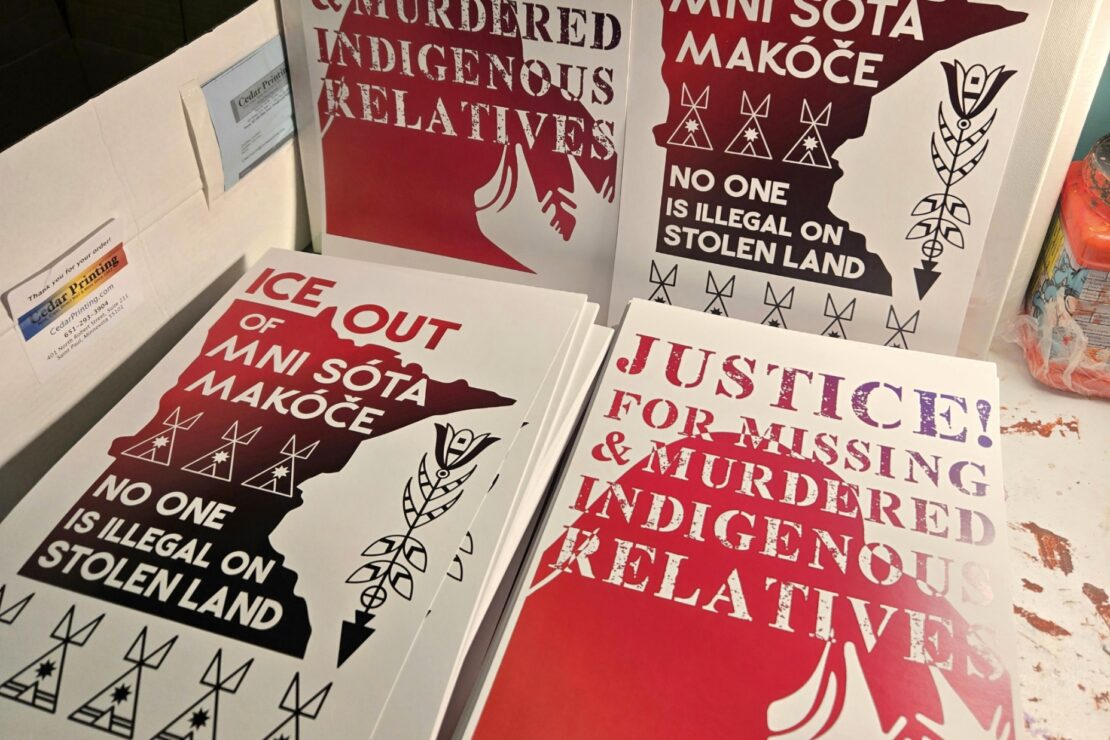
As our organization has turned our building into a safe gathering place for community members to find supplies, services, and resources, we want to uplift the voices of our staff and community members who are helping our front-line observers. These are the voices of those striving to hold All My Relations Arts gallery as a place of comfort for the community to gather, find resources, and access medicines. This series focuses on how art is healing, the importance of community and gathering, and how democracy is Indigenous.
Past participating artist and current NACDI board member Courtney Cochran reflected on what she experienced:
How do you define the relationship between your artistic practice and your activism? Do they overlap, or are they distinct?
Courtney Cochran: I think, intentional or not, my artistic practice and activism often overlap. Whether I’m working on a commission, a community-based project, or simply creating to play and explore, these threads often overlap. My work becomes a way to show up for community and can create spaces for dialogue and reflection through art.
What compelled you to merge art political action?
CC: I wanted to mobilize with the skills and equipment I have by volunteering my time and offering free screen printing. Art can help push movements forward and I wanted to contribute through my artistic practice. I also wanted to show up for the community as they’ve always shown up for me, and to be a good relative and ally. There are many different ways to show up, and I knew this was the quickest way for me to contribute.
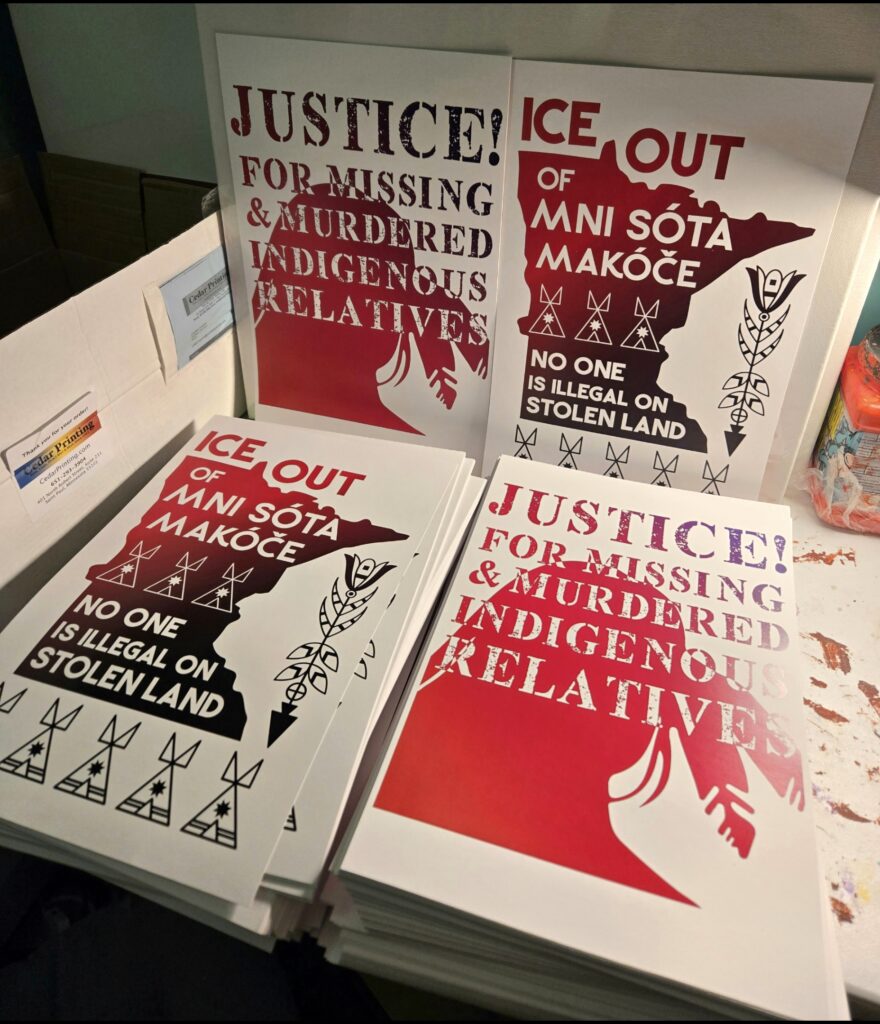
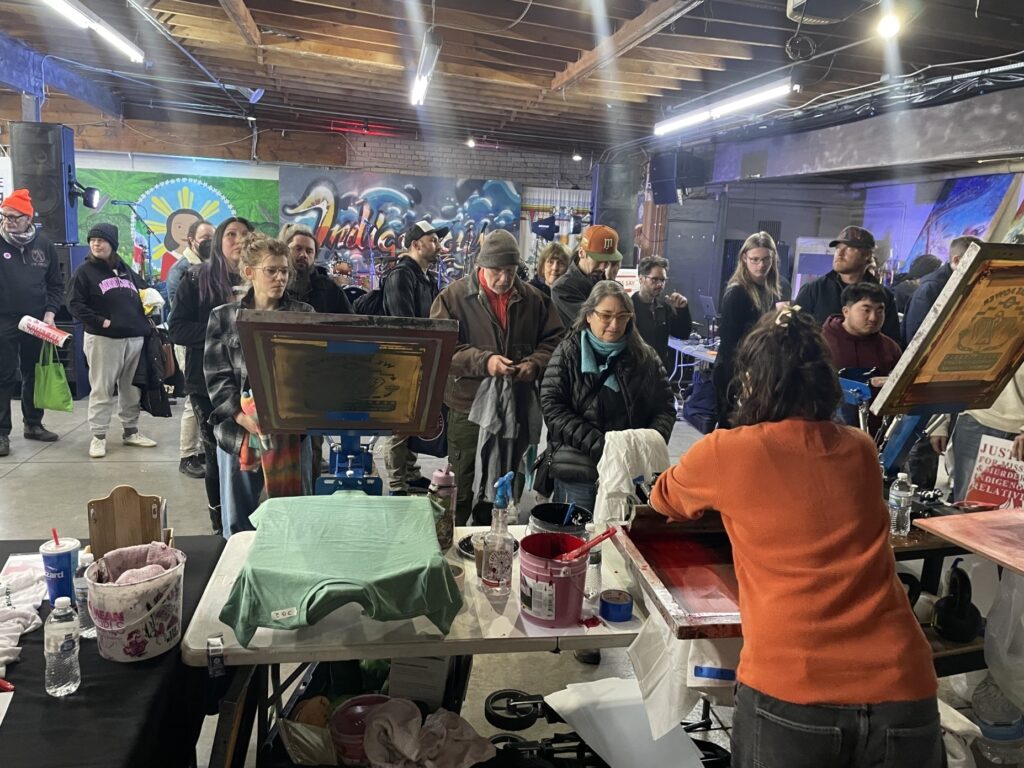
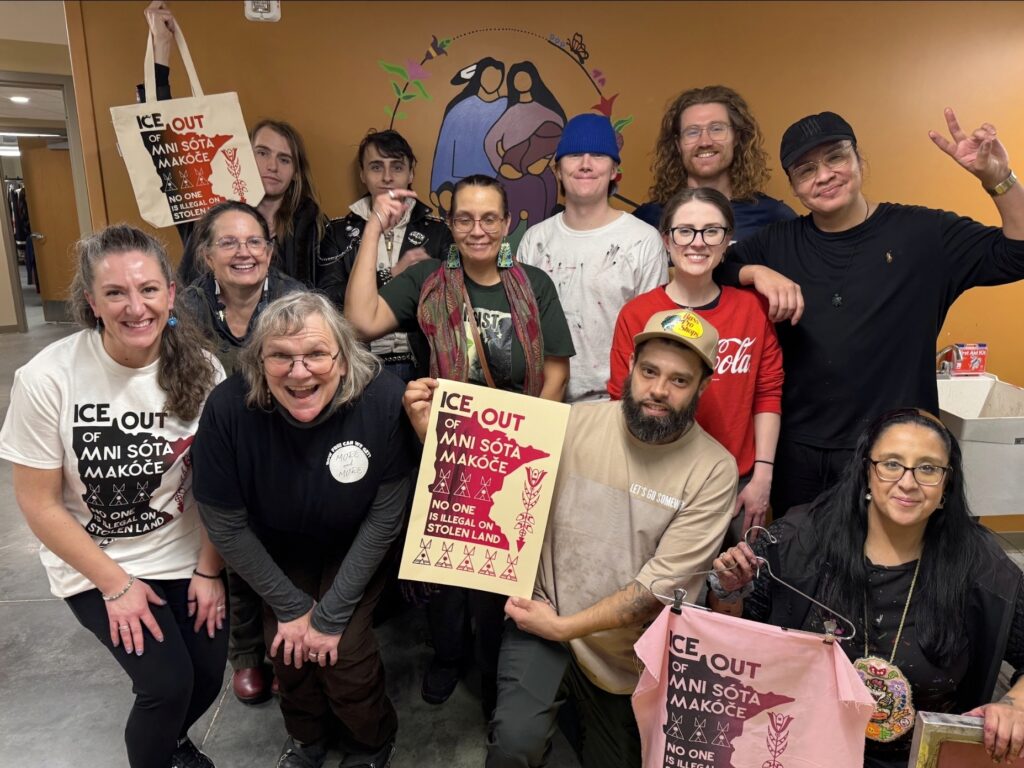
I reached out to Marlena Myles because I knew she would come up with an impactful image and fast. During the very first session, community members started reaching out to volunteer. People stepped out of line just to help, and other printers from The Printing Grounds jumped in as well. It quickly became something much bigger than we expected, with everyone showing up for each other.
What is it about screenprinting as an arts medium that’s effective to get the message out quickly and accessible for the community to participate in?
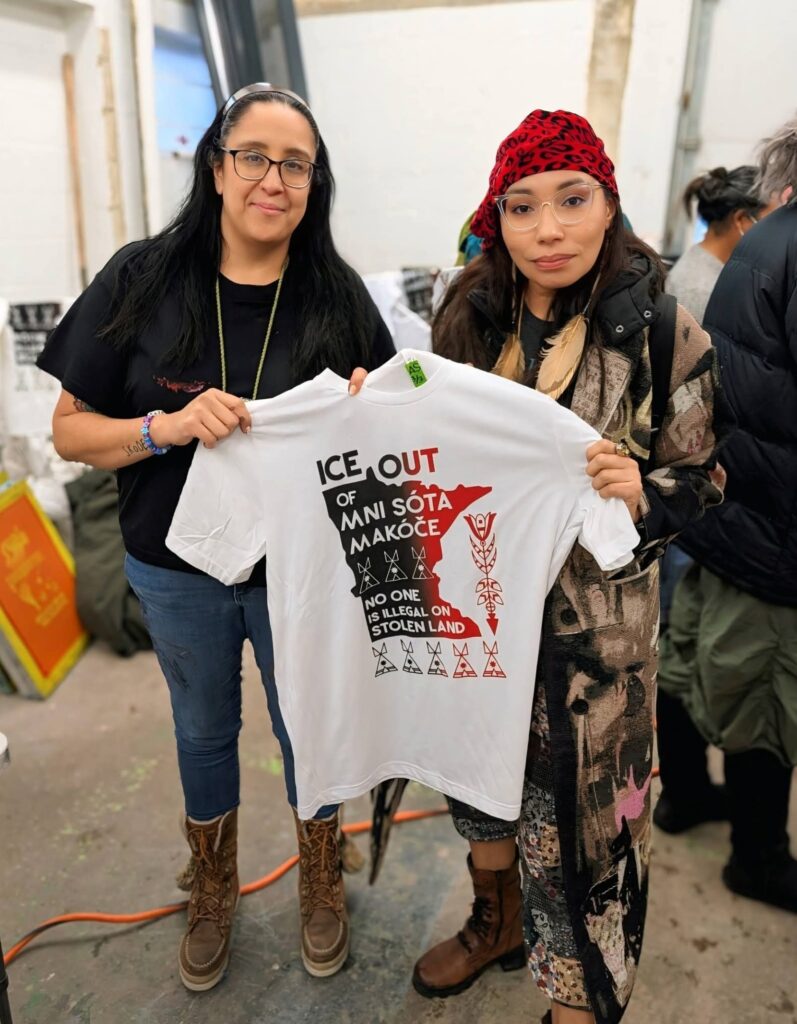
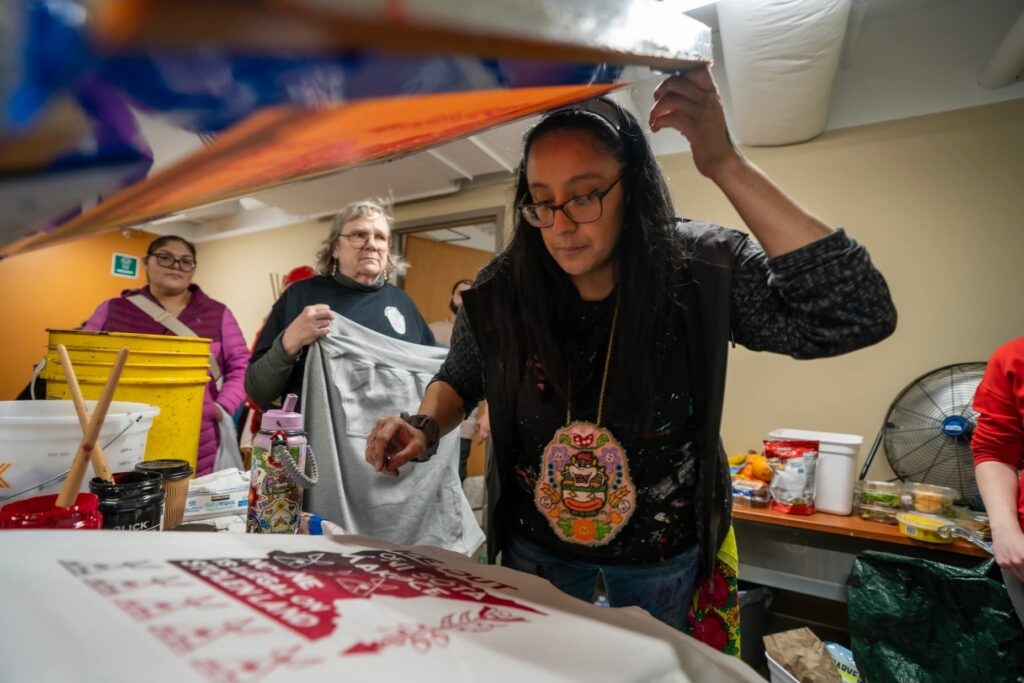
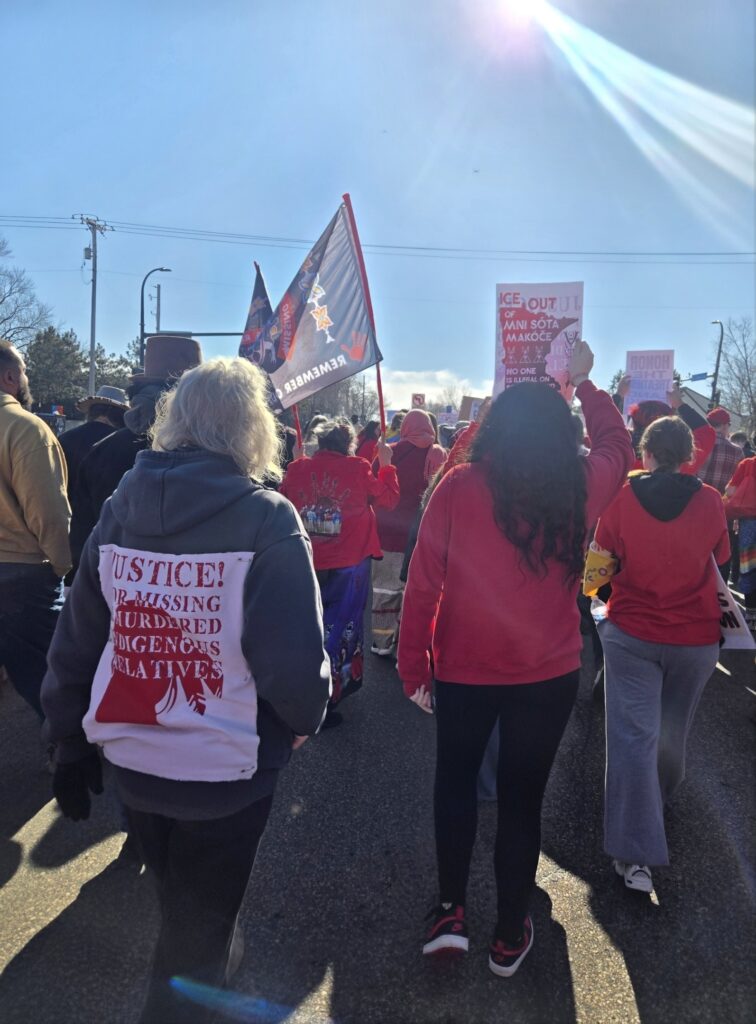
CC: I wanted a way to produce a lot of prints quickly, so screen printing just made sense. It’s fast, easily replicated, and accessible, which made it perfect for reaching the community. So far, myself and the amazing volunteers have done roughly 5,000 prints across community centers, schools, and organizations in Minneapolis and St. Paul. We had activities for families with small children while they waited in line, and an express line for elders. We printed on shirts, sweaters, pillowcases, ribbon skirts, and tote bags—and I even printed on a long piece of canvas that Alayna Eagle Shield turned into a traditional cradleboard. Throughout these pop ups we added a “We Are Power” design created by Marlena and one for the MMIR march.
What is your ultimate goal for a project: raising awareness, changing policy, fostering community dialogue, or something else?
CC: The goal was to come together and foster community in a safe and supportive way. We didn’t sell shirts—instead, people brought their own, and we upcycled and printed on them. If someone couldn’t stay long, we found a way to get their prints to them, sometimes mailing them to those who couldn’t make the drive. People came from all over Minnesota, and some shared that they mailed prints to relatives who had moved to places like North Dakota, Alaska, Florida, and Sweden.
What is the difference between impact and visibility in your work? Which do you prioritize?
CC: I think both impact and visibility are prioritized. Of course I want the work I do to be impactful and seen by people, but it’s also important to remember that visibility and impact aren’t just about the artist. Most of my work is deeply rooted in community, so it’s important that those voices and experiences are reflected in the work and that the community is actually included in shaping what impact looks like for them.
How do you build trust and reciprocity with the communities you work alongside or represent in your art?
CC: For me, building trust and reciprocity means showing up in a good way, clear communication, full transparency and mutual collaboration. It’s about building and nurturing relationships before, during, and after any art project, so the work is rooted in real connection and care for the community.
How do you take care of yourself while you work on high impact socio-political projects like this and what grounds you?
CC: Being in community and seeing all the care and love has been really grounding for me. I’ve been getting a lot better at asking for help with organizing, setting up equipment, rides or volunteers. That has helped me so I don’t spread myself too thin and have time to take care of myself and my family.
What advice would you give to emerging artists who want to integrate activism into their practice?
CC: Think about what’s close to your heart and what you want to focus on—whether it’s a project with community or something you create on your own. I often overthink a bunch of ideas, and sometimes it’s easier to just jump in and start creating—things often fall into place as you go.
Show up in a way that feels important and authentic to you.
Listen and work with community, be transparent and intentional, and remain flexible.
Take care of yourself along the way.
Even small contributions like offering time, materials, or creative support matter.
Don’t be afraid to ask for help, ask to study under someone, or participate in skill sharing to grow your practice and understanding. Most of the time, people are willing and excited to share skills and connect with other artists.
*All images courtesy of the artist.